 The history of jigsaw puzzles goes back several hundred years. Jigsaw puzzles are more than a pastime; they’re a cultural phenomenon that has entertained and challenged people for centuries.
From their origins as educational tools to their rise as a global hobby, puzzles have woven their way into family traditions, therapy programs, and even art.
But where did jigsaw puzzles come from? How did a simple idea evolve into one of the world’s most beloved forms of entertainment?
Let’s piece together the fascinating history of jigsaw puzzles.
Table of Contents
1. The Origins: Educational Beginnings in the 1760s
The story of jigsaw puzzles begins in 1762, when John Spilsbury, a London map engraver and cartographer, had a clever idea.
He mounted a map onto a thin wooden board and carefully cut around the country borders with a fine saw.
These early puzzles, called “dissected maps,” were designed to teach geography to children. They quickly became popular among wealthy families and schools, combining learning with play.
👉 Fun Fact: The word “jigsaw” wasn’t used until much later. Spilsbury’s tool was a fine handsaw, not the jigsaw tool we know today.

Precision cutting dies provide various shapes and accurately fitting jigsaw puzzle pieces. A reference poster is included to assist with puzzle solving.
2. 19th Century Growth: From Education to Entertainment
By the 1800s, puzzles expanded beyond geography. Manufacturers began creating puzzles featuring:
– Historical scenes
– Famous artwork
– Everyday life illustrations
They were still hand-cut from wood, making them expensive and primarily enjoyed by the upper class. But their appeal as both educational and entertaining grew steadily.
In the late 19th century, technological advances in printing and cutting made puzzles more colorful and accessible, slowly expanding their audience.
3. The Rise of Cardboard Puzzles in the Early 20th Century
The early 1900s saw a significant shift: cardboard puzzles entered the market. Initially, wooden puzzles were considered superior in quality; however, cardboard puzzles were far cheaper to produce.
During the Great Depression (1930s), puzzles became incredibly popular. Why?
– Affordable entertainment when money was tight.
– Offered hours of distraction and satisfaction for just a few cents.
– Weekly puzzle releases (like magazines) became a cultural craze.
👉 Puzzle sales soared, and cardboard quickly overtook wood as the dominant material.
4. The Golden Age of Jigsaw Puzzles
From the 1930s to the 1960s, puzzles became a staple of family life. Card tables and puzzle nights were common across Europe and North America.
Popular themes included:
– Scenic landscapes
– Popular advertising images
– Americana and nostalgic scenes
– Famous artworks by painters like Van Gogh and Monet
Jigsaw puzzles became both entertainment and a form of art appreciation rolled into one.
5. Modern Innovations and Specialty Puzzles
By the late 20th century, puzzles had diversified far beyond their traditional form. Innovations included:
– 3D Puzzles → Famous landmarks and structures like the Eiffel Tower.
– Double-Sided Puzzles → Two images for double the challenge.
– Gradient & Mystery Puzzles → Designed for serious puzzlers seeking new challenges.
– Digital Puzzles → Online and app-based puzzles brought puzzling into the digital age.
Today, puzzles appeal to all ages, with designs ranging from children’s learning puzzles to luxury wooden collectibles.

Assemble the mystery puzzle, uncover hidden clues, and read about the shocking murder mystery in the included short story booklet. Use the final pages of the storybook in a mirror to reveal the murderer!
6. Puzzles as Therapy and Brain Health Tools
Jigsaw puzzles aren’t just for fun. They’re recognized for their cognitive and therapeutic benefits. Research shows puzzles can:
– Improve memory and problem-solving skills.
– Delay cognitive decline in seniors.
– Reduce stress and promote mindfulness.
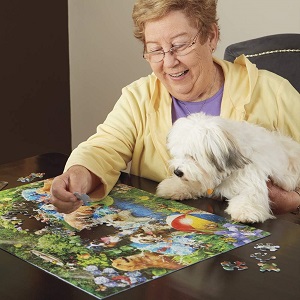
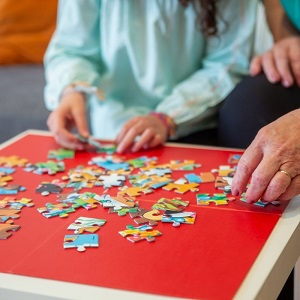
– Encourage teamwork and communication in group settings.
This has led to puzzles being used in classrooms, therapy programs, and senior care facilities worldwide.
7. The Puzzle Boom During the Pandemic
In 2020, jigsaw puzzles experienced an unexpected renaissance. As people stayed home during the global pandemic, sales skyrocketed.
– Puzzles became a form of stress relief and mindfulness.
– Families rediscovered them as a way to spend time together.
– Manufacturers saw record-breaking demand, with puzzles selling out for months.
👉 The puzzle boom highlighted how timeless and comforting puzzles remain, even in a digital world.
Puzzling Then and Now
From hand-cut wooden maps to mass-produced cardboard classics, jigsaw puzzles have traveled a long journey. They’ve taught, entertained, and comforted generations, proving their lasting appeal.
👉 Want to experience the history for yourself? Explore our recommended classic puzzle collections and discover puzzles that connect past and present.
🎁 Bonus: Download your Free Puzzle Tracker Log Sheet to record your puzzling journey through history!

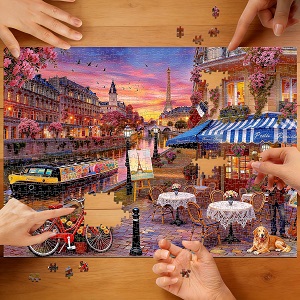
This 1,000-piece jigsaw puzzle makes for an ideal and thoughtful gift for puzzle enthusiasts and beginners alike. A bonus puzzle poster is also included so that you have a handy reference of what the completed puzzle should look like while you put yours together.
Jigsaw Puzzles Have a Long History
The history of jigsaw puzzles is a story of evolution, from elite educational tools to affordable entertainment, and now to therapeutic and artistic pursuits.
At Jigsaw Puzzle Lovers, we celebrate puzzles not just as games, but as pieces of history, art, and human connection.
💬 What’s the most memorable puzzle you’ve ever completed: a childhood map, a vintage landscape, or a modern 3D design? Share your story in the comments!